UV Damage Patterns on Oriental Rugs
Sun fading on Oriental rugs doesn't happen uniformly. You get specific patterns based on sun angle, furniture placement, and time of day.
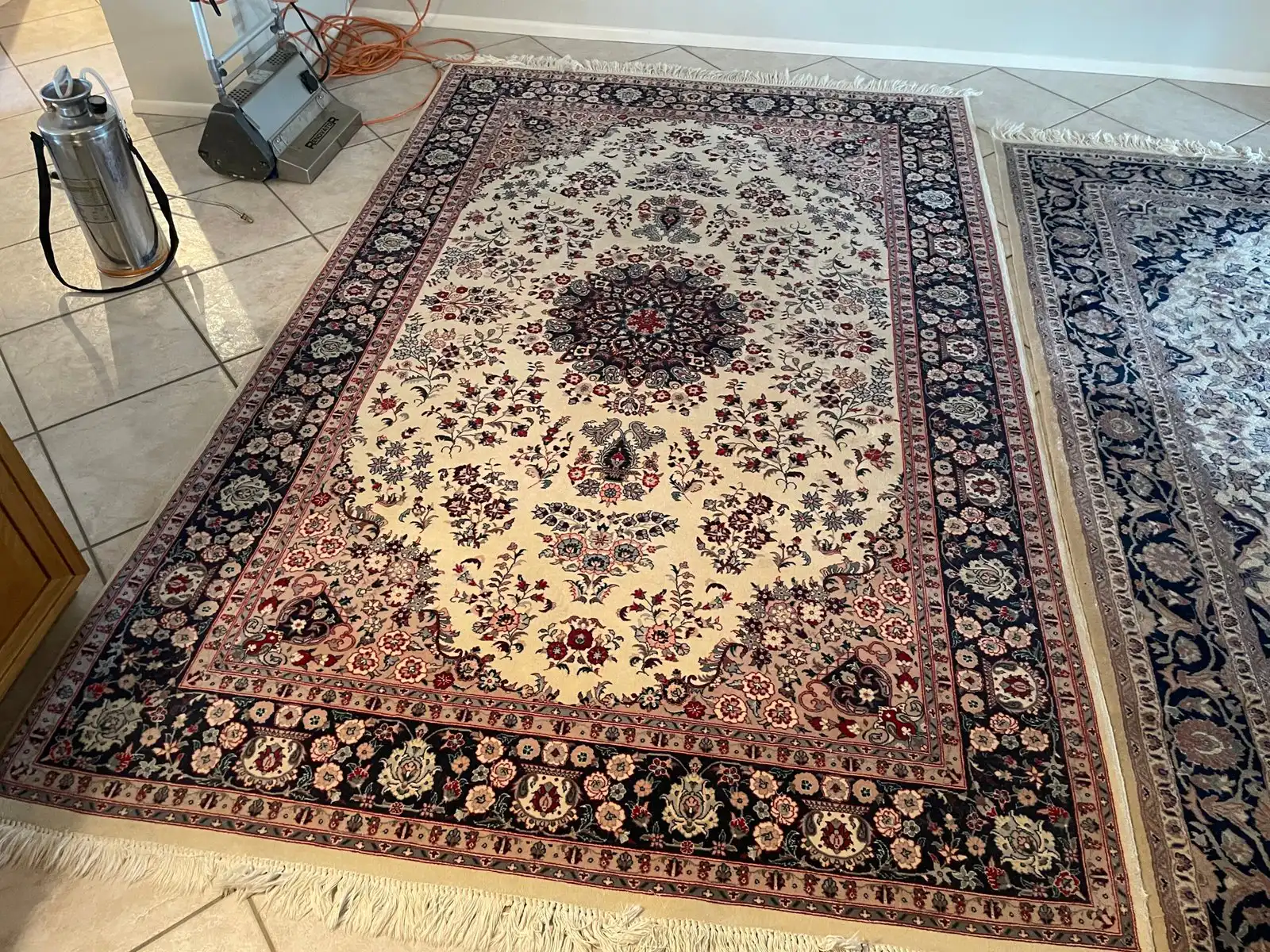
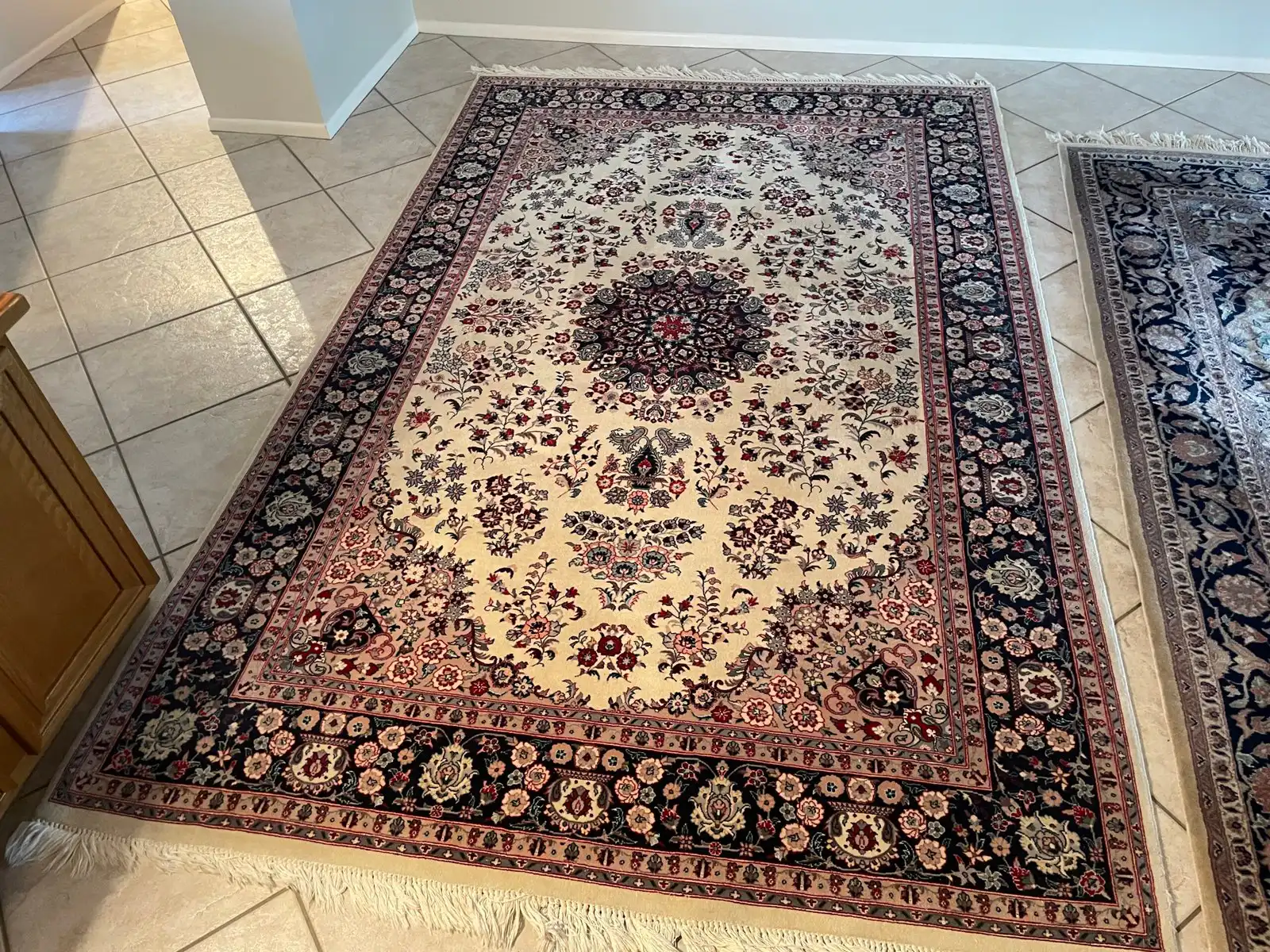
Border fading is the most common - edges closest to windows fade first, creating a gradient from intense fading at the window edge to darker tones moving away. Pattern washout happens when colors fade unevenly - blues go gray, reds go orange-pink, and intricate designs lose definition. Furniture shadows create sharp lines between faded and protected zones that become visible when you move furniture.
In Surprise, west is the worst direction for Oriental rug placement because afternoon sun is hottest and most concentrated. Combined with our elevation and clear skies providing minimal atmospheric UV filtering, the intensity is exceptional.
💡 Natural Dyes vs Synthetic Dyes
Traditional Oriental rugs with natural dyes (madder root reds, indigo blues, saffron yellows) are more UV-sensitive than modern synthetic dyes. A naturally-dyed rug in direct Surprise sun can show noticeable fading in 6-12 months. Modern synthetic dyes are somewhat more UV-stable but still fade with prolonged exposure. If you have a valuable hand-knotted piece with natural dyes, placing it near west-facing windows is essentially a countdown to permanent color loss.
Assessing Sun Damage During Cleaning
Dirt darkening looks like: Uniform dullness across the rug, or concentrated darkening in traffic areas. The colors are still there under the soil - cleaning reveals them.
UV fading looks like: Lightened areas near windows with sharp transitions between faded and protected zones. The color is actually gone from the fibers - cleaning won't bring it back.
I cleaned an Oriental rug in Royal Ranch that the homeowner thought was badly faded. After cleaning, the color came back significantly - turned out it was mostly soil darkening, not UV damage. But I've also cleaned rugs where cleaning confirmed the fading was permanent. I'll give you an honest assessment of what's recoverable.
Sliding Glass Doors vs French Doors
Sliding glass doors have large single panes with consistent UV transmission across the entire surface. Rugs get even, concentrated exposure. French doors have multiple panes with frames between, creating partial shade patterns that can result in striped fading effects.
Low-E glass on newer doors reflects some UV, slowing fading but not eliminating it. Standard builder-grade glass from 2000s-2010s Surprise homes blocks virtually no UV.
I cleaned an Oriental rug at The Residences at Stadium Village positioned in front of French doors. The fading pattern had distinct vertical stripes where door frames created shade. Unprotected sections between frames showed severe color loss while areas under frames were protected.
Protecting Your Oriental Rug From Future Fading
- Reposition away from direct sun. The most effective solution. Use an inexpensive synthetic rug near patio doors instead.
- Install UV-filtering window film. Quality films block 90-99% of UV while allowing visible light. Cost is $8-15 per square foot installed.
- Use UV-blocking curtains or solar shades during peak sun (2-6pm). Automated smart shades make this easy.
- Rotate the rug every 3-6 months. Distributes fading more evenly instead of concentrating it on one side.
- Accept that some fading will happen if the rug must stay near windows. Budget for professional dyework eventually, or accept graceful aging.
For valuable rugs in Marley Park, Mountain Vista Ranch, or Surprise Farms, the safest choice is keeping them out of sun zones entirely - dining rooms, bedrooms, or interior spaces where UV exposure is minimal.
When to Clean vs When to Restore
Cleaning alone helps when: the rug has minor fading plus dirt buildup. Removing soil shows the true colors, which might be acceptable.
Professional dyework is needed when: fading is severe, uneven, or affects valuable or sentimental rugs. A specialist can re-dye faded areas to match original colors. Cost is $200-1,000+ depending on rug size and damage extent.
For most Surprise homeowners, prevention is far more cost-effective. A $300 UV window film installation protects a $2,000 rug indefinitely. Waiting until the rug needs $800 dyework makes less financial sense.
Learn more about our area rug cleaning process, or explore other cleaning services we offer in Surprise.

 (602) 429-9602