Why Pool Traffic Is Harder on Rugs Than Regular Foot Traffic
Here's what most people don't think about: dry foot traffic is relatively gentle on area rugs. Dry grit sits near the surface and vacuuming can pull most of it out. Wet foot traffic is a different story entirely.
When someone walks in from the pool with wet feet, moisture acts as a binding agent. Fine particles from the pool deck - concrete dust, dirt, trace minerals - stick to wet skin and get deposited into the rug with every step. The moisture then helps those particles migrate down past the pile and into the rug foundation before it evaporates.
Over a pool season of daily traffic - kids running in and out, adults walking to the kitchen, towels being dragged across the floor - those particles layer up in the rug base. This is why pool-area rugs feel gritty and crunchy underfoot even after vacuuming. The grit isn't on the surface anymore. It's packed into the foundation where vacuum suction can't reach it.
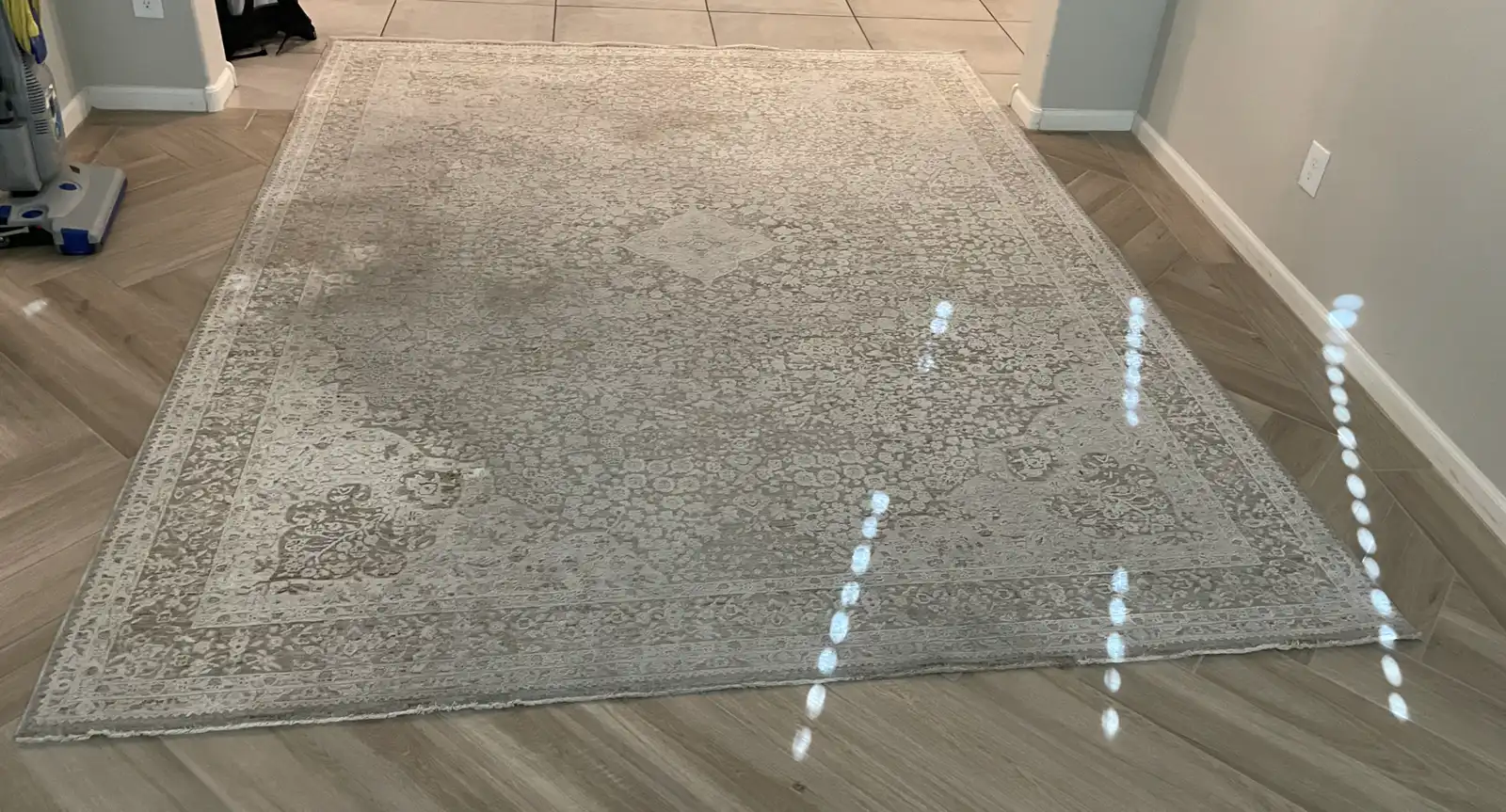
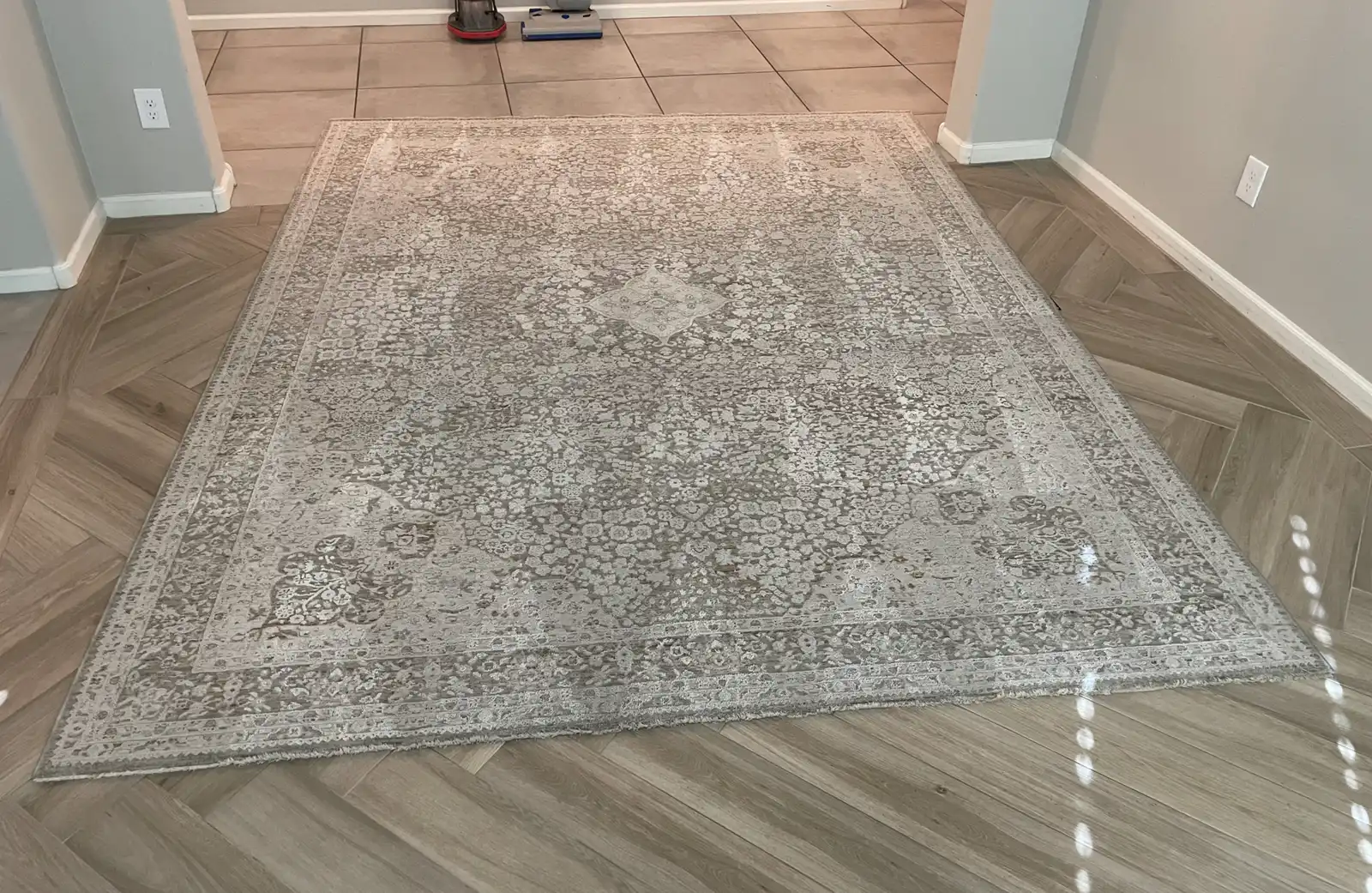
I cleaned a rug in Mountain Vista Ranch mid-September where the family had a pool and three kids. The rug was near the French doors to the backyard. When I examined it, the foundation grit load was significant - visible darkening in the pile base and a gritty feel even in areas that looked visually clean from standing height. After deep extraction, the rug felt lighter and softer because the foundation weight was actually removed.
💡 Pool Deck Grit Sources
Even without a sandy beach entry, fine grit accumulates on pool decks from outdoor furniture dust, concrete breaking down microscopically, landscaping dirt, pool toy debris, and desert dust settling on wet surfaces. This grit is finer than regular dirt, and wet feet carry it directly into your rug where it compacts into the foundation with every step. Worst in homes with concrete decking - which is most Surprise pools.
How I Clean Pool Season Rugs in Surprise
First, I evaluate the rug's condition and fiber type. Pool season rugs often have moisture damage in addition to soil buildup. I check the backing for deterioration, test for color fastness (pool chemical exposure can affect dyes on natural fiber rugs), and assess what types of contamination are present.
Second, I apply a pre-treatment formulated for organic and oil-based soil. Pool season contamination - skin oils, chemical residue, biological material from wet use - requires different chemistry than regular dry dirt. The pre-treatment penetrates the fiber structure and breaks down bonded residue so it can be suspended and extracted. Dwell time is critical - 15-20 minutes allows the solution to work.
Third, I agitate to release foundation grit. The compacted particles in the rug base don't release without mechanical action. I use controlled agitation that reaches the foundation without damaging the pile.
Fourth, I extract with the VLM process. Low-moisture extraction pulls out the suspended residue, released grit, pool chemical deposits, and cleaning solution. The goal is complete removal, not redistribution.
Fifth, I rinse thoroughly. Pool chemical residue requires proper rinsing to neutralize. If any contaminants or cleaning solution remain in the rug, they'll attract soil and the rug will get dirty faster.
Sixth, I dry completely and evaluate results. Some rugs need additional spot treatment in heavily trafficked areas. I don't consider the job done until the contamination is actually gone.
French Doors vs Sliding Glass Doors: Traffic Pattern Differences
Many Surprise homes have replaced original sliding glass doors with French doors, or still have the builder-installed sliders. The door type affects rug wear patterns.
Sliding glass doors usually have one stationary panel and one sliding panel. Traffic flows through the same opening every time, which creates a concentrated wear path on the rug. That path gets all the pool season contamination while areas farther from the opening stay relatively clean.
French doors spread traffic over a wider area since both doors can open. The rug wear is more distributed, but the total contamination is the same - just spread across more rug surface.
This matters for cleaning because concentrated wear requires more aggressive treatment in specific areas, while distributed wear needs more uniform cleaning across the entire rug. I cleaned a rug in The Residences at Stadium Village where the homeowner had recently replaced sliders with French doors. The old wear pattern - a narrow dark lane - was still visible even though the doors had changed. That pattern was from years of slider traffic compacting soil in one specific path.
Preventing Pool Season Rug Damage in Surprise
You can't completely eliminate pool season wear on rugs near patio doors - it's going to happen when the rug is in the traffic path. But you can minimize damage.
- Use a doormat outside the patio door. Catches initial grit and moisture before feet hit the rug. Rinse it weekly during pool season.
- Encourage towel drying before coming inside. Wet feet transfer more contamination than dry feet. A towel by the door reduces moisture tracked onto the rug.
- Vacuum 2-3 times per week during pool season. Removes surface particles before they get compacted by foot traffic. Weekly isn't enough during heavy use.
- Rotate the rug mid-season. Turn it 180° in July so the wear pattern shifts and contamination distributes more evenly.
- Get professional cleaning in October/November after pool season ends. Removes accumulated buildup before it bonds deeper during fall and winter.
For homes in Marley Park, Surprise Farms, or Royal Ranch where pools get heavy family use, the post-season cleaning schedule is essential for rug longevity.
When to Replace vs Restore a Pool-Area Rug
Not every pool-area rug in Surprise is worth cleaning. Here's how to think about it.
If the rug is structurally intact - fibers aren't fraying, backing isn't deteriorating, pile isn't worn through - professional cleaning almost always makes sense. Even rugs that look significantly darkened after pool season usually clean up much better than expected because the issue is contamination, not damage.
If the rug has been sitting near pool doors for multiple seasons without cleaning and has developed permanent discoloration from chemical exposure or moisture damage to the backing, cleaning will improve it but won't fully restore it. I'll tell you honestly during the walkthrough what to expect before you spend money on it.
The practical guideline I give Surprise homeowners: if your pool-area rug is a quality piece you want to keep, clean it every fall and it'll last many seasons. If it's an inexpensive rug you bought knowing it would take abuse, replace it every 2-3 years rather than investing in professional cleaning. For the rug near your Marley Park or Surprise Farms pool doors that's been there five summers without cleaning - schedule an honest evaluation first and we'll figure out together whether cleaning makes financial sense.
Learn more about our area rug cleaning process, or explore other cleaning services we offer in Surprise.

 (602) 429-9602