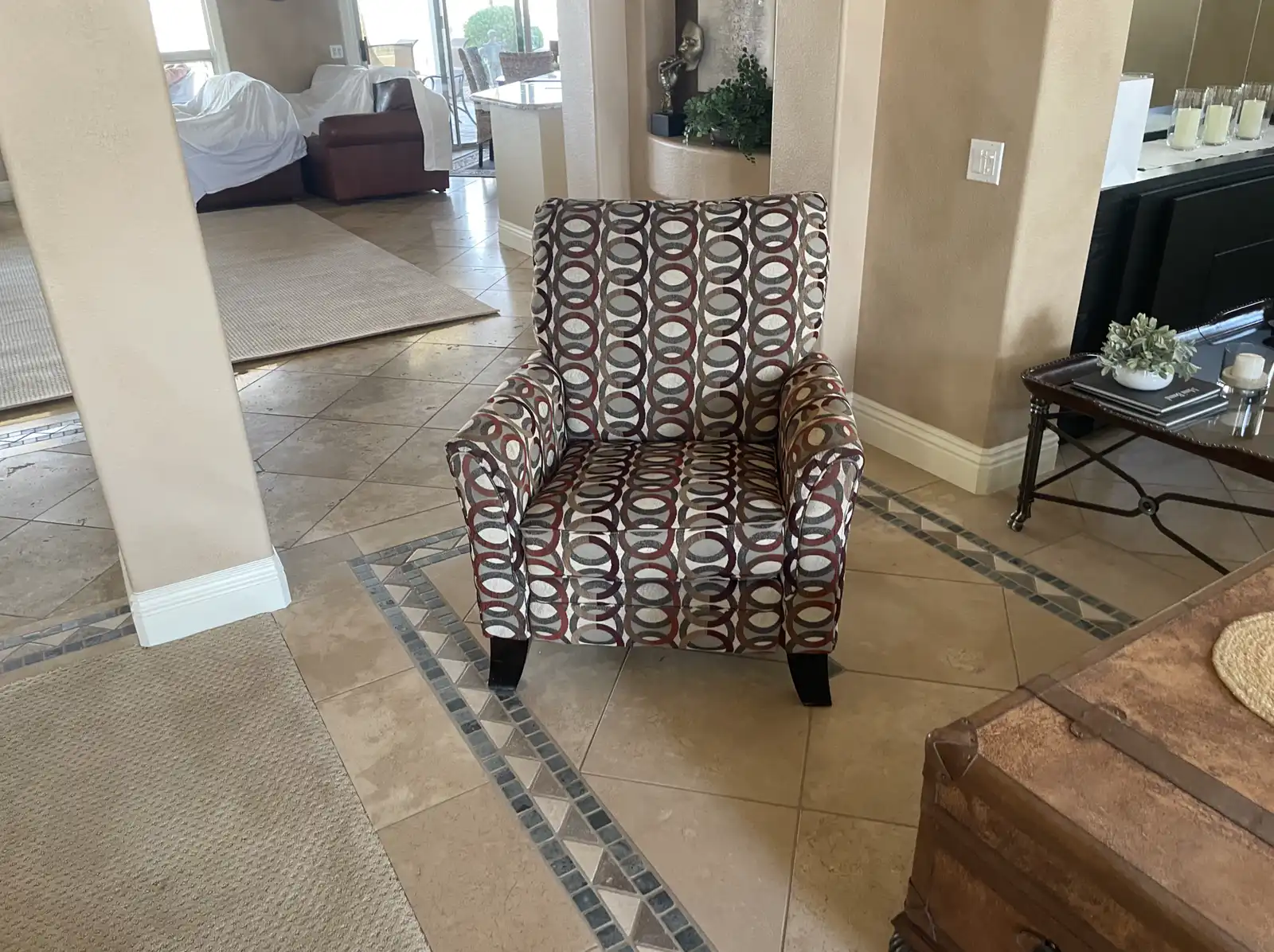
Why Headrests and Armrests Need Different Treatment
Not all body oil is the same, and cleaning the headrest the same way you'd clean the armrests is a mistake most DIY attempts make.
The oil on your headrest comes from your scalp. Scalp oil is thick - it's got sebum (that waxy stuff your skin makes naturally) mixed with whatever you put in your hair. Leave-in conditioner, gel, hairspray, those argan oil treatments everyone in dry climates uses. All of that transfers to your headrest and creates this paste-like buildup that really bonds to fabric.
If you've ever touched a used recliner headrest and felt that slick, almost sticky surface - that's what you're feeling.
Armrest oil is different. It's lighter, comes mostly from your hands and forearms. Hand lotion, light skin oil, food grease from eating snacks in the chair, sweat. The stain on armrests tends to spread over a wider area and fade out gradually instead of having that sharp edge you see on headrests.
It also soaks deeper over time because the contact is lighter but more constant. Your arms are on those rests almost the entire time you're sitting there.
This matters for cleaning because the headrest needs more aggressive agitation to break up that thick scalp oil. But you can't oversoak a small area or the thin padding underneath won't dry right and you'll end up with a water ring or stiff spot.
The armrests can handle slightly more moisture since the stain is spread wider, but the cleaning solution needs more time to work because the oil has penetrated deeper into the fiber structure.
Most people - and honestly, a lot of cleaning services - treat the whole chair the same way. You end up with one zone that looks great and another that still has oil in it.
What Happens When Avondale Homeowners Try to Fix It Themselves
I get calls all the time from people in Avondale who already tried fixing their recliner themselves. And I'm not gonna sugarcoat it - the DIY attempt usually makes things harder to fix than if they'd just called me first.
Dish soap and a scrub brush: makes sense, right? Dish soap cuts grease on plates, should work on greasy fabric. Problem is, dish soap leaves residue. It might lift some surface oil, but now you've got soap film in the fabric that attracts dirt faster than the original oil did. A week later the spot looks worse - oil plus soap plus new dirt stuck to the soap. And the fabric feels crunchy because the soap dried into it.
A guy over near Rancho Santa Fe called me about this exact thing last summer. He'd scrubbed his recliner headrest with Dawn and a brush, thought he got it clean. Two weeks later it was darker than before and felt like sandpaper. I had to remove the original body oil plus all the dried Dawn residue before I could actually get it clean.
Rubbing alcohol does cut through oil, but it also strips the finish off most upholstery fabrics. On polyester blends - which is what probably 80% of recliners sold around here are made from - alcohol makes the fabric lose its texture and develop a permanent shiny spot. Sometimes it even bleaches the color out.
Those rental steam cleaners dump way too much hot water and detergent into upholstery. On a recliner headrest where the padding is just a thin layer of foam, all that water saturates everything and takes forever to dry. Even in Avondale's dry air you're looking at a day or two. By then the padding is compressed, the fabric is stiff from detergent drying in it, and the headrest feels like cardboard. Plus the oil isn't even fully gone - it's just been diluted and spread around.
Baking soda absorbs some surface oil, sure. But oil that's soaked into the fiber? Baking soda does nothing for that. What it does do is leave white powder deep in the fabric that you can't vacuum all the way out.
Every DIY method follows the same pattern - it addresses what you can see on the surface but doesn't touch the oil that's actually soaked in. Then it adds a new problem on top of the original one.
The Safe Agitation Process for Thin Padding
When I clean a recliner headrest in Avondale, the entire process is built around controlled moisture and targeted agitation. The padding under a recliner headrest is usually only 1-2 inches thick - way thinner than a couch cushion. First, I apply controlled citrus solution to break down the oil structure. The D-Limonene dissolves scalp oil at the molecular level. Second, I use targeted agitation with the right tool pressure - aggressive enough to break up paste-like scalp oil, but controlled enough not to drive moisture into thin padding. Third, I extract immediately so dissolved oil gets pulled out, not left to air-dry. Fourth, I finish with airflow to speed final drying and prevent stiffness. The whole headrest dries in 1-2 hours, not days.
Why Armrests Need More Dwell Time, Less Agitation
Armrests are tricky because the oil has spread over a wider area and soaked deeper from constant light contact. If you attack armrest stains the same way you'd attack headrest stains, you just spread the oil wider instead of removing it.
The citrus solution gets applied evenly across the entire stained area - not just the darkest spot. Oil doesn't stop at the visible edge of the stain. It fades out gradually, and if you only clean the dark center, you end up with a lighter spot in the middle and darker edges. That looks worse than the original stain.
The solution needs dwell time to penetrate deep where the oil has migrated. For armrests, I let it sit for 2-3 minutes before agitation. That gives the D-Limonene time to work its way down to the base of the fibers and start breaking oil bonds at every level.
Agitation on armrests is gentler than on headrests because the oil layer isn't as thick. I'm working the solution through the fabric to release deeper oils, not scrubbing surface buildup. Too much mechanical action can damage the fabric texture or push oil laterally instead of lifting it.
Extraction is thorough but spread across the wider stained area. The goal is to remove dissolved oil evenly so the armrest looks uniform when it dries - no light spots, no dark edges, no visible transition lines.
Calf Oil and Foot Dirt That Builds Up Invisibly
Everybody focuses on the headrest and armrests because those are the stains you can see from across the room. But there's another oil zone most people don't think about until I point it out - the footrest panel.
When you kick back with your feet up, the backs of your calves and your heels are sitting against the footrest fabric. Your calves make body oil just like everywhere else on your skin. And if you're like most people around here - kicking shoes off and reclining in shorts during summer - that's bare skin on fabric for hours.
The footrest also picks up foot dirt. Even wearing socks, your feet carry dust, dead skin, whatever you walked through during the day. That soil mixes with calf oil and creates this grayish film that just looks like the footrest is dingy.
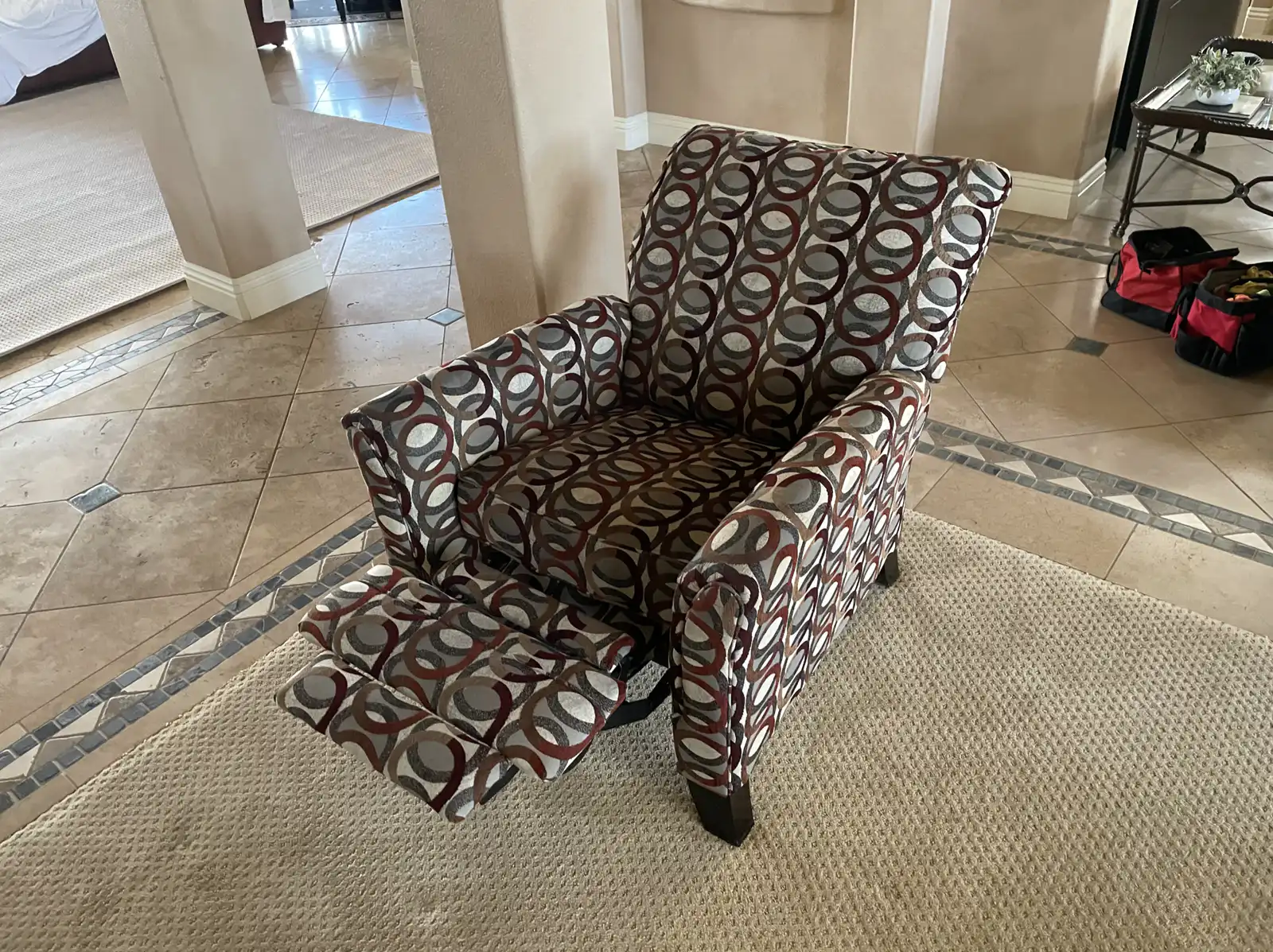
There's also a mechanical thing happening. The footrest folds and unfolds every time you recline. All that bending works dirt and oil deeper into the fibers right at the fold line. Look at most used recliners and you'll see a darker stripe across the footrest where it bends.
When I clean recliners in Diamond Ridge, Coldwater Ridge, or over by Gateway Pavilions, the footrest gets the same treatment as everything else. People are always surprised when they see the color difference once I'm done - they had no idea how much buildup was there because it happened so gradually.
Summer Oil Production and Dry Fabric Absorption
Living in Avondale means your recliner is dealing with tougher conditions than it would in cooler climates. The heat and dryness here create a cycle that speeds up oil buildup and makes it stick harder.
When it's 110-115 outside during summer - even in neighborhoods with decent shade like around Garden Lakes - your body is producing more oil as a cooling response. You walk in from the heat and drop into your recliner, and your skin is actively pushing sebum to the surface faster than it would in spring. So you're depositing more oil per minute of sitting than someone in a milder climate would.
The AC situation adds to it. Most homes here run air conditioning nonstop May through September. AC pulls humidity out of indoor air, so the inside of your house is even drier than outside. Your recliner is sitting in what's basically a dehumidifier for five months straight. The fabric stays perpetually dry and thirsty for moisture - and body oil is the moisture it's getting.
There's also a hair product angle specific to dry climates. When the air is this dry, people use more leave-in conditioner, oil treatments, moisturizing products to keep their hair from turning into straw. All that transfers to your headrest.
A customer in Garden Lakes couldn't figure out why her brand new recliner got headrest stains within three months. Turned out she'd switched to a coconut oil hair treatment because of dry winter air, and it was transferring to the headrest every night. Three months of coconut oil contact created stains that looked like years of wear.
Summer evenings are peak damage time. Come home from work, change into shorts and a tank, drop into the recliner. Now you've got bare arms on the armrests, sweaty neck on the headrest, bare calves on the footrest. Maximum skin contact, maximum oil production, maximum absorption into dry fabric.
A single Avondale summer can add as much oil to a recliner as two years of use in Seattle.
Slowing Down Oil Buildup Between Cleanings
Getting your recliner cleaned fixes what's already there, but the oil starts coming back the second you sit back down again. Here's what you can do to slow it down:
Headrest covers actually work. A washable cotton or microfiber cover catches the oil before it hits the upholstery. Wash it weekly - way easier and cheaper than cleaning the whole chair. The trick is finding one that stays put. Velcro strips or non-slip backing work better than just draping a towel, which slides off every time you stand up.
Throw blankets on armrests help more than you'd think. Same idea - it's a washable barrier between your skin and the fabric. Keep a thin cotton blanket over the armrests through summer even if you're not cold. It catches hand oils, lotion, and food grease that would otherwise go straight into the upholstery.
Quick face wash before recliner time if you can manage it. Not always realistic, but if you're someone who comes home soaked in sweat and goes straight to the chair, even washing your face and hands removes a bunch of oil that would transfer to the fabric. Matters especially during Avondale summers when your skin oil production is cranked up.
Vacuum the recliner every week. Won't remove oil that's already soaked in, but it removes loose skin cells, hair, dust, surface dirt that mixes with the oil and makes stains worse. Use a handheld vacuum or your regular vacuum's upholstery attachment.
Don't use fabric spray as a substitute for actual cleaning. Recliner starts smelling funky from oil buildup, so people spray it with Febreze. Those products don't remove oil - they just layer fragrance chemicals on top of it. Over time the spray residue mixes with the oil and creates a sticky film that makes real cleaning harder later.
Learn more about our upholstery cleaning process, or explore other cleaning services we offer in Avondale.

 (602) 429-9602