All Ways Organic Citrus Carpet & Upholstery Cleaning - Home
🇺🇸 Made in USA
🍋 Citrus Based
🌵 Eco-Friendly
Hours
Mon – Sat
7AM – 7PM
Book Online
Book
Online
📍 Serving the Greater Phoenix Valley
🕐 Mon – Sat  7AM – 7PM
👨‍👩‍👧‍👦 Family Owned & Operated
🇺🇸 Made in USA
🍋 Citrus Based
🌵 Eco-Friendly
Book Online
Staircase Carpet Cleaning in Avondale Arizona - All Ways Organic
Avondale, Arizona

Avondale AZ
Staircase Carpet Cleaning

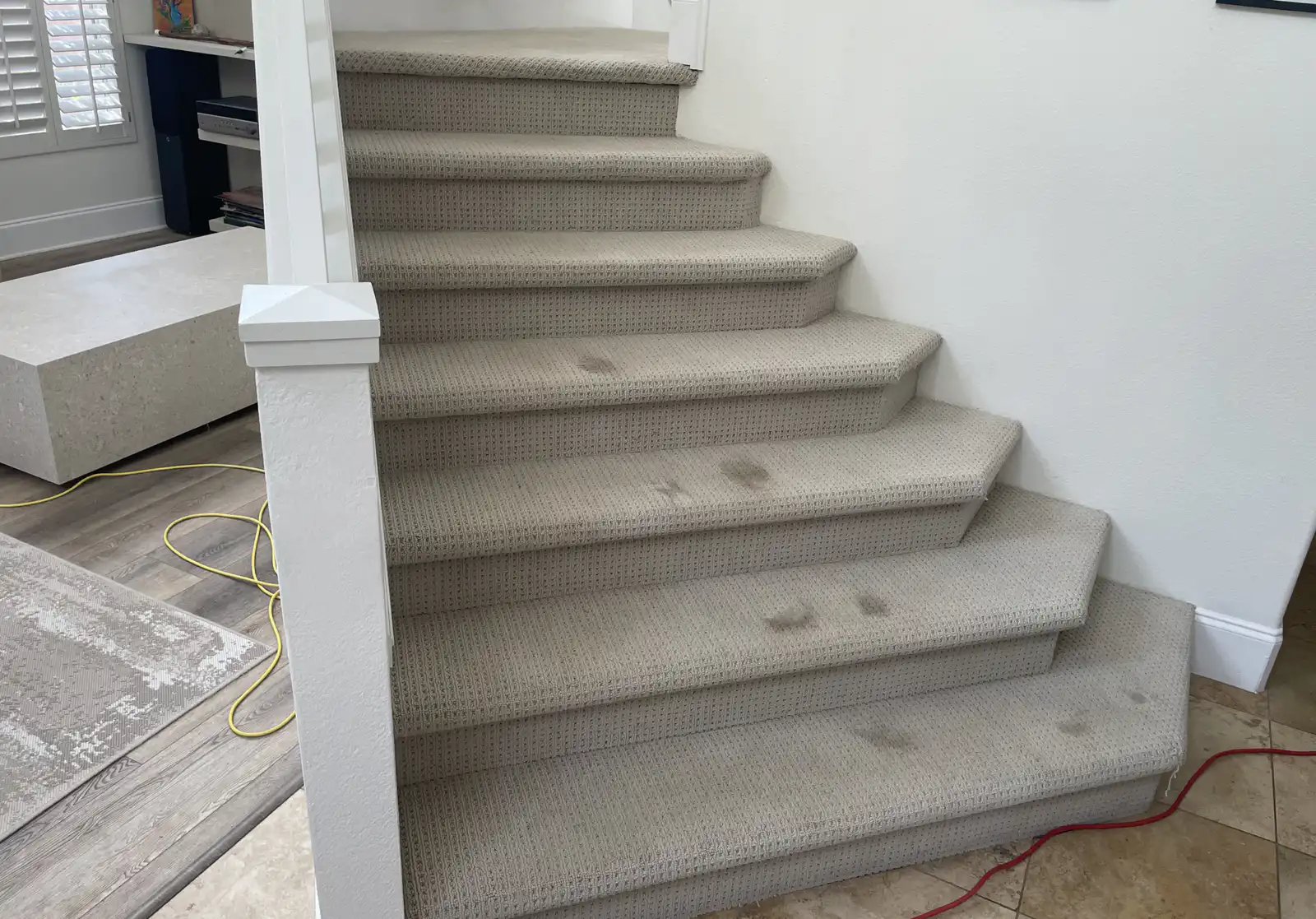
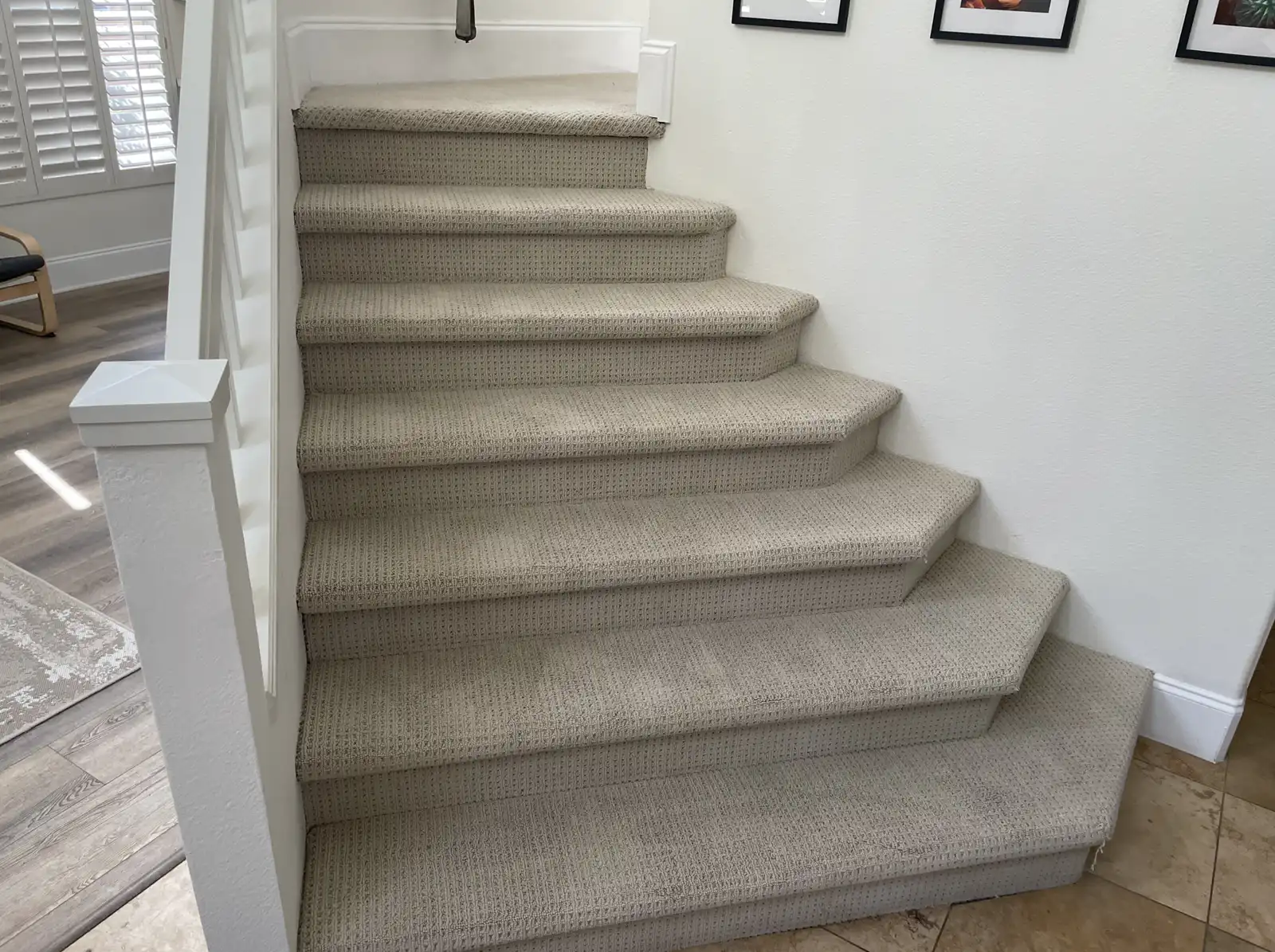
If your staircase carpet in Avondale looks gray on the risers even though you vacuum regularly, it's because your HVAC system is using your stairs as a giant air filter - return vents pull air through your house constantly, and all that dust, pet dander, and desert particles get deposited directly into the vertical carpet fibers on your stair risers. The real buildup is happening on the risers where airflow deposits a film of contamination that regular vacuuming can't reach.

Google
5.0 / 5.0
Google Reviews
Organic
100% Organic
Citrus-based products
Owner operated
Owner-Operated
Kyle shows up every time
Quick dry
~1 Hour Dry Time
Not 3 days like steam
No hidden fees
No Hidden Fees
Price quoted = price paid
Schedule Your Cleaning
Book Your Avondale Staircase Carpet Cleaning
Pick a date, build your clean, and confirm - takes about 60 seconds
1Date
/
2Build
/
3Book
Your Clean
$0

When works for you?

Pick a day and time. We'll handle the rest.

Build your clean

Tap a category, then add what you need.

Need commercial cleaning? Call (602) 429-9602 for a custom quote.

Confirm your cleaning

Almost there. Fill in your details and lock in your spot.

📅
Driveway parking available?
Tap any item above to adjust add-ons or remove it.

You're All Set!

Booking #

Confirmation sent to your email.

What to expect: I'm Kyle, the owner, and I'll be the one showing up. Carpets dry in about 1 hour. Your home will smell like fresh citrus. Safe for kids and pets immediately after cleaning.

Questions? Call or text (602) 429-9602

Need help?(602) 429-9602
SMS Consent: By providing your phone number when booking, you consent to receive appointment reminders and follow-up messages via SMS from All Ways Organic. Msg frequency varies. Msg & data rates may apply. Reply STOP to opt out at any time. Privacy Policy · Terms
Transparent Pricing

No Hidden Fees. No Surprises.

The price you see is the price you pay. Riser agitation and grooming included - no upsells at the door.

Hallway carpet
Hallway
Standard hallway,
full extraction
$30
per hallway
Book Now >
Room of carpet
Room of Carpet
Any standard room,
full extraction
$50
per room
Book Now >
Staircase carpet
Staircase
Full staircase with risers,
riser agitation included
$75
per staircase
Book Now >
Optional Upgrade Treatments
Available at checkout to customize your cleaning
Deodorizer
Deodorizer
Extra odor elimination for a deeper fresh
High Traffic
High Traffic
Targeted treatment for heavy-wear areas
Pet Treatment
Pet Treatment
Neutralizes pet odors at the source

All prices include riser agitation, tread cleaning, spot treatment, and grooming. Dry time: under 1 hour.

What Our Customers Say

Real Reviews, Real Results

Your HVAC system is using your staircase as a giant air filter - and the risers are catching everything.

About This Service

Avondale AZ Staircase Carpet Cleaning:
Removing HVAC Dust from Vertical Fibers

Here's what most people don't realize: when your heating and cooling system pulls air back through return vents, it creates airflow patterns in your home. And in two-story houses, staircases end up being like highways for that air movement because they connect your upstairs and downstairs. The air has to go somewhere, and it takes the path of least resistance - which is usually straight through your stairwell.

As that air moves, it carries microscopic particles. Dust from outside. Skin cells. Pet dander. Cooking oils that vaporize and circulate through your HVAC. Over time, this builds up into a film you can actually see if you run your hand across the riser. It feels almost sticky or waxy sometimes - a combination of airborne contamination mixed with body oils from people's hands on the handrail.

I cleaned a staircase in a home off Dysart Road where the lady told me she thought her carpet was defective because it turned brown on the risers within a year of installation. The treads looked fine, but the vertical parts looked awful. Turns out her return vent was right at the bottom of the stairs and her filter hadn't been changed in over 6 months. The carpet on her stairs was literally filtering her entire home's air.

Why It Matters
What's Actually Happening to Your Staircase Carpet
HVAC airflow
HVAC Air Filtering
Return vents pull air through your stairwell constantly. Vertical riser fibers catch and hold dust, dander, and cooking vapors that horizontal surfaces would shed.
Desert dust
Western Desert Dust
Avondale's western valley location brings iron-oxide rich dust that stains lighter carpet aggressively. Agricultural particles and older HVAC systems compound the problem.
Fiber damage
Sandpaper Effect
Embedded soil grinds against fibers with every footstep. Neglected staircases age 3x faster than maintained ones - turning 5-year-old carpet into 15-year-old carpet.
Extraction process
Vertical Extraction
Risers need hand agitation and targeted extraction - not just surface vacuuming. Pre-spray dwell time breaks down the oily airflow residue bonded to vertical fibers.

Airflow Deposits Soil Where You Don't Expect It

Everyone assumes the treads get dirty because people step on them. And yes, foot traffic does compress the fibers and grind in dirt. But the risers - the vertical parts - often look worse than the treads, and that doesn't make sense if you're only thinking about foot traffic.

The reason is airflow. Moving air carries particles, and when that air slows down or changes direction, it deposits those particles. Vertical carpet fibers on stair risers catch and hold airborne contamination in a way that horizontal tread fibers don't.

Think about it: when air flows past a vertical surface, the particles settle into the fibers and stay there. Gravity isn't pulling them out like it would on a horizontal surface. Vacuuming doesn't reach them because most vacuum heads are designed for horizontal surfaces, not vertical ones.

I see this constantly in Avondale homes - especially in Crystal Point, Harbor Shores, and the newer developments near Gateway Pavilions where two-story floorplans are common. The staircase risers look gray or brown from accumulated airflow soil, while the treads might look relatively clean.

The back corners of each tread also accumulate soil in a weird pattern. When you walk up stairs, your foot pushes air forward and down. That air carries dust and particles and deposits them right in the back corner where the tread meets the riser. Regular vacuuming never gets back there because most vacuum heads are too wide and the suction disperses before it can pull from that tight angle.

Western Desert Dust and Older HVAC Systems

Avondale is further west in the valley, which means we get more dust blowing in from the western desert areas. That dust has a different mineral composition than what you get in north Scottsdale - it has more iron oxide, which is why it has that reddish tint and why it stains lighter carpet more aggressively.

A lot of Avondale neighborhoods were built in the 90s and early 2000s - Historic Avondale, areas near Friendship Park, developments off Lower Buckeye Road. These homes often have original HVAC systems that are less efficient at filtering air than newer systems. Older systems move more dust through the home, which means more deposition on staircase carpet.

Proximity to agriculture also plays a role. Parts of Avondale are near farmland, which means certain times of year you've got pollen, dust from tilled fields, and other agricultural particles in the air that end up in homes. This is way different than Scottsdale or Paradise Valley where you're dealing with more manicured landscaping.

The layout of Avondale homes also matters. A lot of newer builds have open-concept floorplans with staircases connecting the levels. These open layouts create significant convection currents - warm air rises, cool air sinks, and the staircase becomes a channel for all that air movement. More air movement means more particle circulation.

Families with kids and pets add to the problem. More kids and pets means more traffic on stairs and more sources of airborne particles. I clean a lot of staircases in Diamond Ridge and Coldwater Ridge where there's evidence of kids sitting on the stairs to put shoes on or playing on the stairs. That concentrated wear in specific spots requires special attention.

Soil Acting Like Sandpaper on Your Carpet Fibers

That embedded soil acts like sandpaper on your carpet fibers. Every time someone walks on those stairs, they're grinding soil particles against the fibers. This breaks down the fiber structure and causes premature wear. I've seen staircases only 5 years old that looked 15 because they were never professionally cleaned. Odors are another issue - soil particles trap pet odors, cooking smells, body odor. Once soil buildup reaches a certain level, even professional cleaning can't fully restore the carpet. The fiber damage is permanent. Staircase carpet is like the oil in your car - ignore it and you'll cause damage that costs way more to fix than basic maintenance.

The Process for Vertical Fiber Extraction

When I clean a staircase in Avondale, the process is different from cleaning horizontal carpet because I'm dealing with vertical riser fibers that have trapped airborne soil.

First, I inspect to see what kind of soil we're dealing with. HVAC-related soil on risers looks and feels different from foot traffic soil on treads. It's usually a gray or brownish film that feels slightly sticky or waxy. That tells me I'm dealing with airborne contamination mixed with oils.

Second, I apply encapsulation pre-spray designed to break down oily airflow residue. For staircase risers with heavy HVAC-related soil, I use a more alkaline solution than I would on regular carpet because we're dealing with vaporized cooking oils, body oil aerosols, and particles that have bonded to the fibers over months of air circulation. The pre-spray needs dwell time - usually 5-10 minutes.

Third, I agitate the risers with a hand brush. The vertical surface needs mechanical agitation because extraction alone won't pull everything out. I'm physically working the pre-spray into the fiber structure to release that embedded airflow soil.

Fourth, I use the VLM (Very Low Moisture) cleaning process with the CRB machine on the treads and hand agitation on risers. The dual-action agitates and extracts at the same time, pulling all that dust, debris, and pre-spray solution out of the fibers.

Fifth, I address any spots or spills that need individual treatment. Staircases get weird spills - drinks that run down multiple steps, food dropped and ground in, pet accidents. Each stain gets the appropriate spot treatment.

Final step: grooming. I brush the carpet fibers on both treads and risers to make them stand up uniformly. This helps with drying and makes the carpet look better.

The whole staircase dries in under an hour because of the low-moisture method. And because I actually extracted the airflow soil from the risers instead of just surface-cleaning, the stairs stay cleaner longer.

When to Clean Based on HVAC Use and Traffic

For most Avondale families, staircase carpet should be professionally cleaned every 12-18 months. If you've got heavy traffic (kids running up and down constantly, pets using the stairs), every 12 months makes more sense.

If your HVAC system runs constantly and you haven't changed your filter regularly, you might need cleaning closer to the 12-month mark. The more air circulation, the more particle deposition on those risers.

Regular vacuuming helps between professional cleanings, but it's not enough. Vacuum both the treads and the risers at least weekly. Use your vacuum's upholstery attachment on the risers if you have one - it works better on vertical surfaces than a regular carpet head.

Change your HVAC filter every 1-3 months depending on usage. A clogged filter makes your system work harder and doesn't catch particles effectively, which means more dust ends up depositing on your staircase carpet.

Getting your stairs professionally cleaned before they look obviously dirty is always better than waiting until they're visibly gray. Early cleaning removes soil before it causes fiber damage. Late cleaning tries to repair damage that's already happened.

Why Regular Cleaning Is Cheaper Long-Term

Carpet replacement on stairs is expensive - way more expensive than people think. You can't just replace the stairs; you have to replace the whole run from bottom to top plus usually the landing. For an average Avondale two-story home, you're looking at probably 12-15 stairs plus a landing.

Carpet installation on stairs is specialized labor. It's not like laying carpet in a bedroom. You're cutting and wrapping each tread, stretching around corners, dealing with vertical risers. Most installers charge premium rates for stairs. You're probably looking at $1,500-$2,500 all in for replacement.

Compare that to maintenance: professional staircase cleaning runs $75-$150 depending on the company and how soiled the stairs are. Do that once a year, and even over 10 years you're spending way less than replacement.

By maintaining your carpet, you're potentially doubling the useful lifespan. I've cleaned stairs for customers who bought their home 15 years ago and still have the original carpet because they've maintained it properly. Meanwhile, I've also had customers who needed replacement after only 8 years because they never cleaned it and the wear and soil damage was beyond repair.

Learn more about our carpet cleaning process, or explore other cleaning services we offer in Avondale.

Common Questions

FAQs About Avondale Staircase Carpet Cleaning

The vertical riser surfaces are exposed to constant air circulation from your HVAC system. When air moves past these vertical fibers, it slows down and deposits dust, skin cells, pet dander, and other airborne particles directly into the carpet pile. Over time this creates that gray film you're seeing. Your treads deal with different soil - mostly foot traffic that compresses fibers - but the risers are literally filtering your home's air as it circulates through the stairwell. In Avondale where AC runs 9+ months a year, this happens faster than in cooler climates.

Your HVAC system creates air pressure differences throughout your home. Return vents pull air back to be cooled, and that air has to move between floors in a two-story home. Staircases provide an open channel for air movement since they connect upper and lower levels. The air flowing through your stairwell carries microscopic particles - outdoor dust, fibers from clothing, cooking vapors, pet dander - and deposits them in the carpet fibers. Regular vacuuming removes surface dust from treads, but it doesn't extract the airborne particles that have penetrated deep into the vertical riser fibers.

Odors come from bacteria breaking down organic material trapped in the carpet fibers. If your stairs smell musty, there's likely accumulated body oils, pet dander, skin cells, and other soils that have built up over time in the fibers and backing. The HVAC airflow problem makes this worse because it deposits additional contamination that mixes with the existing soil. Moisture is usually involved too - from monsoon season humidity or people walking upstairs with damp feet. Proper deep cleaning with enzyme treatment removes the source of the odor instead of just masking it.

In most cases, the gray film is removable with proper cleaning. It's airborne soil that has deposited into the vertical fibers over time, not permanent staining or fiber damage. The key is using the right cleaning method - pre-spray designed for oily airflow residue, mechanical agitation on the risers, and thorough extraction. If your carpet has been neglected for years and the soil has caused actual fiber breakdown, some damage might be permanent. But most Avondale staircases I clean respond very well once the HVAC dust is properly extracted.

For most families, every 12-18 months. If you've got heavy traffic from kids and pets, or your HVAC runs constantly and you don't change filters regularly, every 12 months makes more sense. The goal is to remove airborne soil and foot traffic contamination before it causes fiber damage. Waiting until the stairs look obviously dirty means the soil has already been grinding against fibers and causing wear. Regular maintenance extends carpet life significantly.

Yes, absolutely. A clean filter catches more airborne particles before they circulate through your home. When your filter is clogged, your system works harder and doesn't filter effectively, which means more dust, pet dander, and other particles end up depositing on your staircase carpet. I recommend changing filters every 1-3 months depending on usage. In Avondale where AC runs almost year-round, monthly changes during peak summer make a big difference.

When you walk up stairs, your foot pushes air forward and down. That air carries dust and particles and deposits them in the back corner where the tread meets the riser - the exact spot your foot barely touches. Over time, this creates a concentrated soil line in that back corner. Regular vacuuming doesn't reach it because most vacuum heads are too wide and the suction disperses before it can pull from that tight angle. Professional cleaning with targeted agitation and extraction is the only way to remove it.

If stairs get dirty again within a few weeks, it's usually because the cleaning method left residue behind or didn't extract the deep airflow soil from the risers. Residue from soaps or detergents attracts dirt faster than clean carpet would. If only the surface was cleaned and the HVAC dust embedded in the vertical fibers wasn't extracted, it will wick back to the surface and make the stairs look dirty again. Proper low-moisture cleaning with complete extraction prevents both problems.

If the carpet fibers are intact and the issue is soil buildup (not actual wear or damage), professional cleaning is almost always worth it. Cleaning costs $75-$150 versus $1,500-$2,500 for replacement. I've cleaned staircases that looked terrible but came out looking almost new once the years of HVAC dust and foot traffic soil were removed. The exception is if fibers are worn through from years of neglect or the backing is damaged - at that point, replacement makes more sense. I'll tell you honestly during the inspection which situation you're dealing with.

Ready to Restore Your Staircase?
Same-week availability - No hidden fees - Pay after you're happy
What Our Customers Say

Real Reviews, Real Results

All Avondale Services
What We Clean in Avondale
All 14
Carpet
Upholstery
Area Rugs
Tile & Commercial
Decorative desert cactus illustration growing from the desert floor