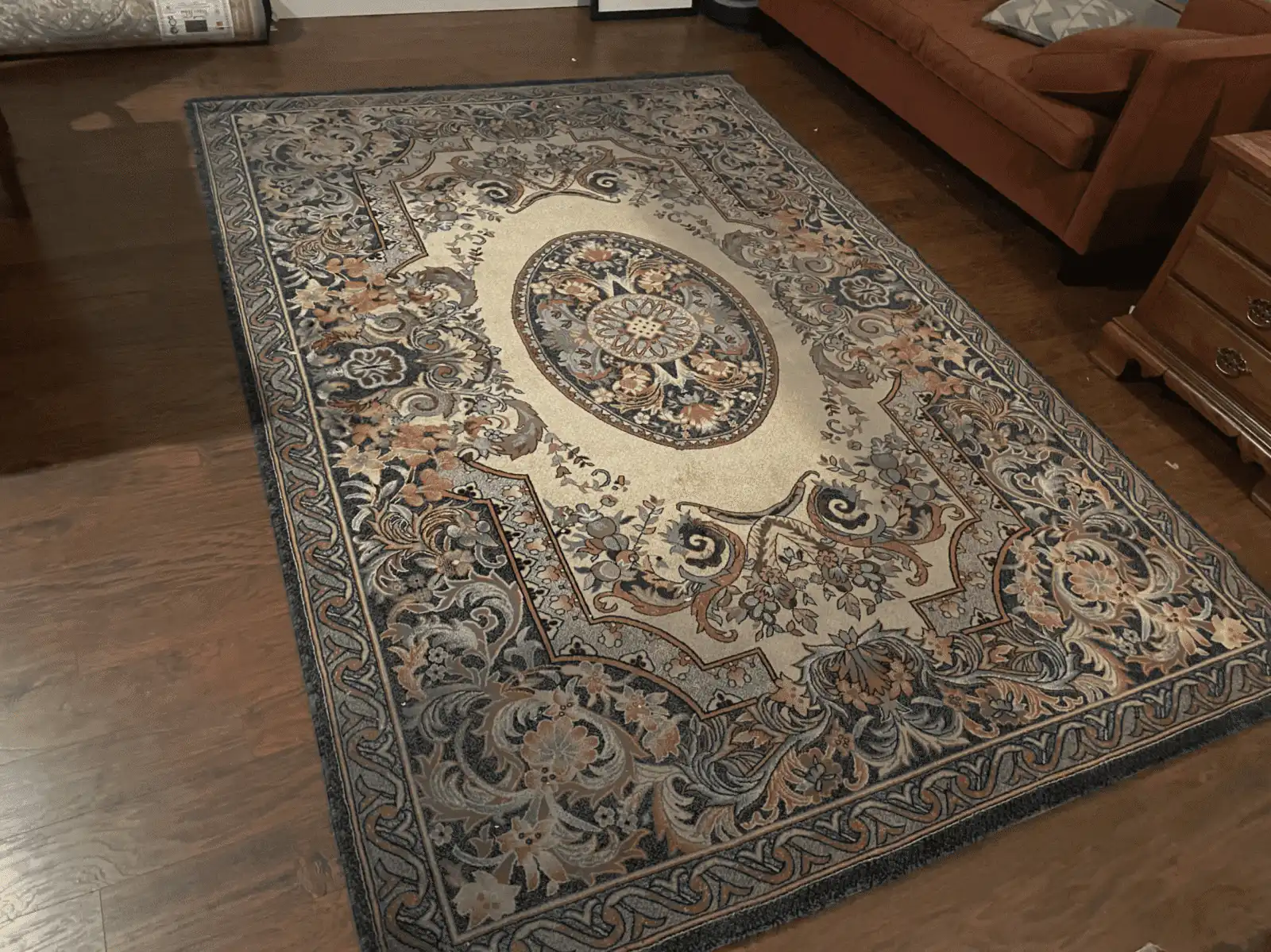
Why Dark Border Colors Start Migrating Into Lighter Areas
Edge dye bleeding is the other major problem I deal with when cleaning Oriental rugs in Avondale. This is when the dark border dyes - usually deep reds, blues, or blacks - start bleeding into the lighter field colors or the fringe.
It happens because many Oriental rugs use natural or semi-stable dyes that were never designed to be saturated repeatedly. These dyes are stable under normal dry conditions, but when they're exposed to excessive moisture and heat, they become mobile.
Once the dyes release from the fibers, they migrate along the direction of water flow. If you're steam cleaning or using too much water, that flow carries the dye inward toward the center of the rug or outward into the fringe. You end up with blurry color transitions, shadowing along the edges, or dark streaks bleeding into light areas.
I see this constantly in Avondale - especially on rugs that have been steam cleaned by companies that don't specialize in Oriental rugs. The homeowner calls me after another cleaner left their rug worse than before. The borders are bleeding. The fringe is darker. The colors look muddy.
The tricky part is that once dye bleeding starts, improper drying can set it permanently. If the rug dries with dyes in the wrong location, those dyes re-bond to the fibers. At that point, you're not dealing with active bleeding anymore - you're dealing with permanently altered colors.
The Home Carpet Cleaner Problem on Oriental Rugs
A lot of Avondale homeowners see a stain on their Oriental rug and try to clean it themselves. They rent a carpet cleaner, buy an upholstery spray, or just use water and dish soap. The intention is good - spot-clean the problem area and move on.
But here's what actually happens: rental carpet cleaners and most DIY solutions apply way too much water for hand-woven rugs. Oriental rugs can't handle the same moisture levels as synthetic wall-to-wall carpet. The foundation absorbs water like a sponge, and that water starts pulling dyes and contaminants through the rug structure.
If you spot-clean just the fringe to try to brighten it, the moisture wicks dye downward from the pile into the fringe fibers. The fringe ends up darker than before because you've moved more dye into it.
If you clean a stain near the border, excess moisture activates the border dyes and causes them to bleed into the surrounding area. What started as a small spot becomes a larger shadowed area with fuzzy color edges.
Scrubbing makes it worse. The mechanical action breaks down dye bonds and pushes moisture deeper. Even if you blot instead of scrub, the damage is often already done by the time you realize the colors are bleeding.
I've cleaned Oriental rugs in Avondale where homeowners made three or four DIY attempts to fix fringe discoloration or edge bleeding. Each attempt added another layer of damage. By the time they call me, the rug needs correction work, not just cleaning.
Avondale's Hard Water Accelerates Fringe Discoloration
Avondale has hard water - high mineral content, especially calcium and magnesium. When you use tap water to clean an Oriental rug, those minerals get absorbed into the fibers. As the water dries, minerals bond with tannins and dyes in the fringe and create a yellowish or brownish cast. If someone steam cleaned the rug or used a home carpet cleaner with tap water, you're not just moving dyes around - you're depositing mineral buildup that makes the fringe look dull and discolored even after it dries. Professional Oriental rug cleaning in Avondale has to account for this with solutions that neutralize mineral deposits.
How I Clean Oriental Rugs Without Activating Dye Bleeding
When I clean an Oriental rug in Avondale that has fringe discoloration or edge bleeding risk, the entire process is built around moisture control. Too much water activates the problems I'm trying to fix. Too little water doesn't clean effectively. The balance is critical.
I use a low-moisture encapsulation process designed specifically for dyed, hand-woven rugs. First, I test the dyes. Before any cleaning, I apply a small amount of solution to inconspicuous areas and check for color release. If the dyes are stable, I proceed. If they bleed, I adjust the chemistry and moisture level to minimize risk.
Second, I apply controlled moisture that suspends soil without saturating the foundation. The solution is designed to keep dye molecules stable while lifting embedded dirt. This prevents the moisture from traveling through the rug structure and pulling dyes into the fringe.
Third, I treat the fringe carefully and evenly. If I only clean the fringe without treating the surrounding pile, moisture wicks dye downward and makes discoloration worse. The fringe has to be cleaned in context with the rest of the rug, not in isolation.
Fourth, I control drying speed and direction. In Avondale's dry climate, this is easier than in humid areas - rapid evaporation reduces the window where dyes can migrate. But I still need to manage airflow so the rug dries uniformly without creating new problems.
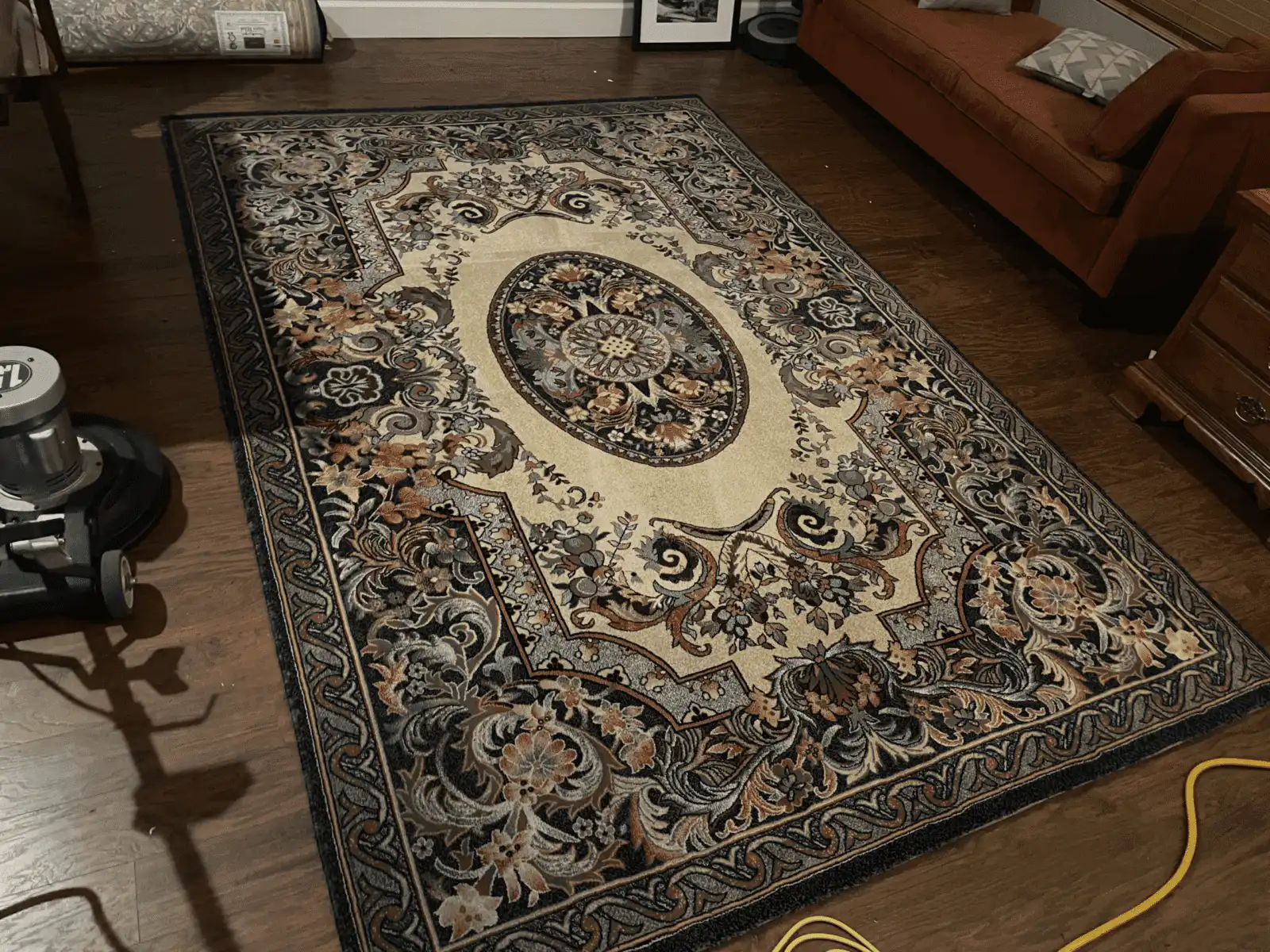
The result: fringe that's brighter without new discoloration. Borders that stay crisp without bleeding. Colors that look vibrant instead of muddy.
When You Can Fix It vs When You Need to Replace It
A lot of rug cleaners will look at discolored fringe and immediately recommend replacement. That's an expensive solution, and it's often unnecessary if the discoloration is caught early.
Fringe correction focuses on removing the dye and tannin staining that's causing discoloration. If the fringe fibers themselves are intact - not broken, not rotted - correction is usually possible. The fringe won't necessarily return to pure white, but it can lighten significantly and look much more uniform.
Replacement makes sense when the fringe is physically damaged. Threads that are fraying, breaking, or separating from the foundation can't be corrected with cleaning. At that point, you need a rug repair specialist to reweave the fringe.
I'm honest with Avondale clients about this during the evaluation. If your rug just has discoloration, cleaning can help. If the fringe is falling apart, cleaning won't fix structural damage. I'll tell you which situation you're dealing with before we start.
Where Fringe Problems Show Up Fastest
Most of the Oriental rugs I clean in Avondale are in dining rooms or entryways. Those are the two locations where fringe discoloration and edge bleeding happen fastest.
Dining room rugs get hit with food spills, drink spills, and chair traffic that concentrates wear on the edges. Families in Harbor Shores, Crystal Point, or near Gateway Pavilions eating meals over their rugs - every spill is an opportunity for moisture to activate dyes and pull staining into the fringe.
Entryway rugs deal with tracked-in moisture from shoes, especially during monsoon season or after watering the lawn. That moisture carries dirt and minerals that settle into the fringe and edges. Over time, the fringe darkens and the border colors start looking muddy.
The rugs in these locations need more careful attention than rugs in low-traffic bedrooms or living rooms. Professional cleaning every 12-24 months prevents the kind of buildup that causes permanent fringe and edge damage.
Why Oriental Rug Cleaning Is Different From Area Rug Cleaning
A lot of Avondale families have Oriental rugs that are heirlooms - passed down from parents or grandparents, or purchased during travel overseas. These rugs have financial value, but more importantly, they have sentimental value. Ruining them with improper cleaning isn't an option.
Oriental rug cleaning is different from standard area rug cleaning because you're dealing with hand-knotted construction that can't handle aggressive agitation, natural dyes that release under certain conditions, wool that contains tannins prone to yellowing, fringe that's structurally integrated into the foundation, and cultural and historical significance that makes preservation critical.
When I clean an Oriental rug in Avondale, I'm not just trying to make it look better. I'm protecting the structure, the dyes, and the details that make the rug worth keeping for another generation.
This is especially important for families in the older Avondale neighborhoods near the Civic Center or in the more established areas where people have had these rugs for decades. Improper cleaning can erase that history in one bad decision.
Learn more about our area rug cleaning process, or explore other cleaning services we offer in Avondale.

 (602) 429-9602