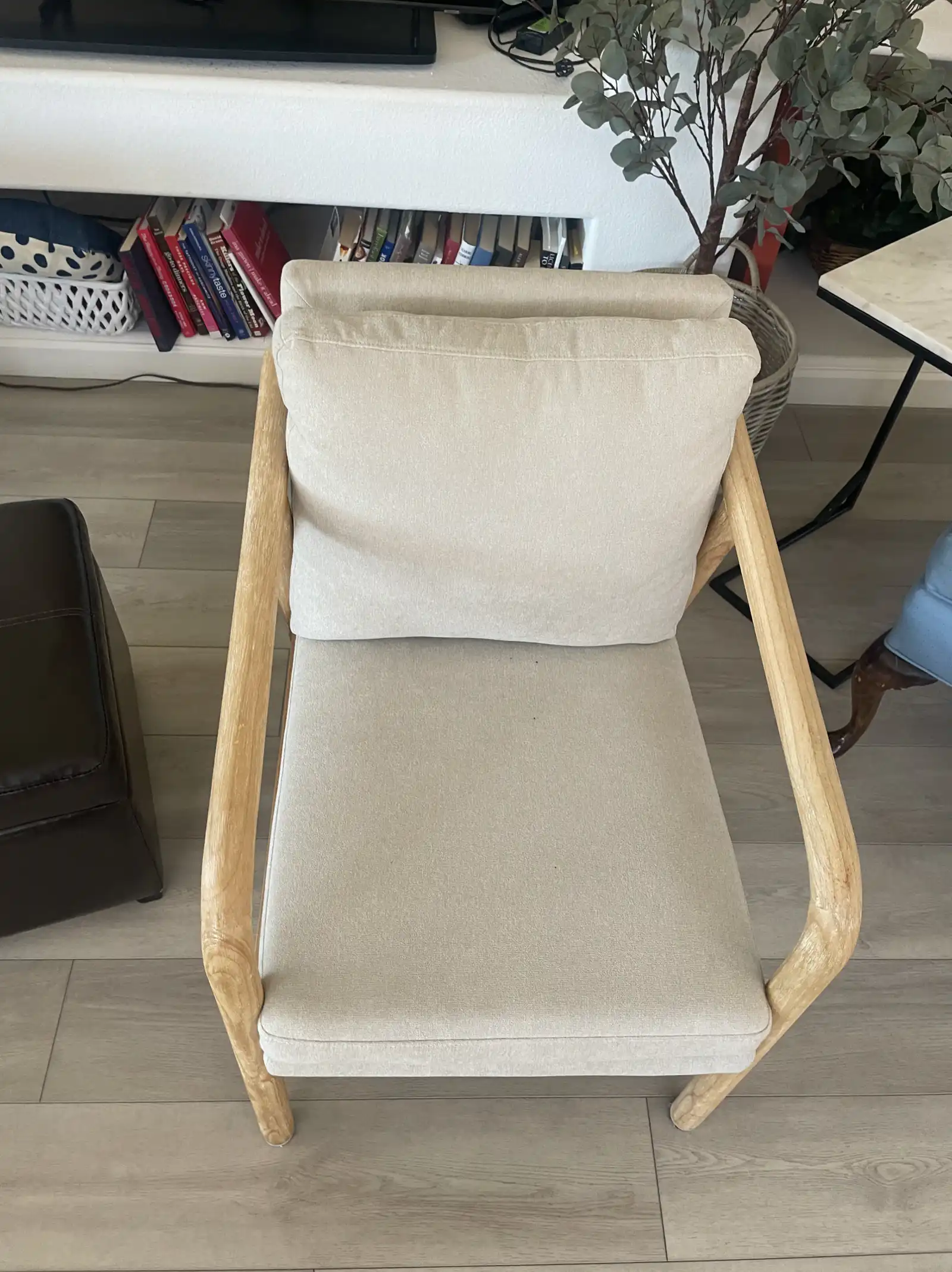
Why Fresh Spills and Old Stains Need Different Treatment
Not all dining chair stains are the same. A splash that happened yesterday behaves very differently from an oil stain that's been reheated 50 times by people sitting on it.
Fresh splashes often sit near the surface. If you treat them correctly - in the right order, with the right products - they respond well. The oil hasn't had time to bond deeply or spread far.
Set-in oil stains are a different problem. These have been through multiple heat cycles. Every time someone sits in that chair, their body heat reactivates the oil and allows it to continue migrating. Sunlight does the same thing. Room temperature changes do the same thing.
By the time you notice the stain has gotten bigger, the oil has already spread laterally through the fabric weave and bonded with fibers in a way that makes it much harder to remove.
This is why random spot cleaning often makes things worse. You add moisture without breaking down the oil first. The water spreads the oil even wider. You scrub, which pushes it deeper. You end up with a ring effect - lighter in the center, darker at the edges - that's harder to fix than the original stain.
I see this all the time in Avondale. Someone tries to clean their own dining chairs with whatever spray cleaner they have under the sink, and they call me a week later because the stains look worse than before.
The Most Common Mistakes Avondale Homeowners Make
Most people see a stain on their dining chair and want to clean it immediately. That makes sense. The problem is the method and products used.
Here's what usually happens: You grab a spray bottle of upholstery cleaner or just use water and dish soap. You spray the stain, scrub it with a towel or sponge, and blot it dry. The stain looks lighter at first, so you think it worked.
But here's what actually happened: you added moisture to oil-based residue without breaking down the oil structure first. Water and oil don't mix - they repel. So the moisture pushes the oil outward through the fabric. Scrubbing makes it worse by forcing oil deeper and spreading it across a larger area.
Then the moisture dries, and the oil that got pushed outward stays there. Now you have a bigger stain than you started with, and it's set deeper into the fabric.
This is why proper dining chair cleaning in Avondale requires a specific sequence. You stabilize the oil first so it doesn't spread. Then you break it down. Then you extract it. Order matters more than the product itself.
Why Linen Reacts Differently Than Microfiber
Linen spreads oil quickly - the natural fiber structure has larger gaps between threads, so oil travels horizontally fast. A small splash on linen can turn into a 4-inch shadow within a week. Microfiber holds oil more tightly in one spot but shows darkening immediately. The tight weave slows horizontal spread, but the oil bonds deeply right where it landed. Polyester blends vary depending on the weave. You can't clean every dining chair the same way - the fabric dictates the approach.
Why Order Matters More Than Product
One of the biggest differences between professional dining chair cleaning and DIY attempts is treatment order. Applying the right product at the wrong time can undo everything.
First, I stabilize the oil. This prevents it from spreading when moisture is introduced later. If you skip this step and go straight to wet cleaning, the oil moves outward and you've already lost control.
Second, I break down the bonded residue. Food oils don't just sit on fabric - they chemically bond with fibers over time, especially after repeated heating from body contact. You need a product that releases that bond without damaging the fabric.
Third, I extract. This is where the broken-down oil and residue get pulled out of the fabric. Extraction has to be controlled - too much moisture causes new problems, too little leaves residue behind.
Fourth, I finish with a neutralizer to prevent re-soiling. This step is often skipped in DIY cleaning, which is why chairs look good for a few days and then attract dirt again.
When sequencing is done correctly, stains shrink inward instead of spreading outward. The fabric stays uniform in color. There's no halo effect. The chair doesn't feel stiff or sticky after cleaning.
The Role of Heat and Pressure in Oil Bonding
Most staining happens where pressure and heat combine. That's why dining chair seats discolor much faster than backs or arms.
Every time someone sits down, their body heat warms any oil already present in the fabric. That heat allows the oil to move and bond deeper into fibers. Add the pressure from sitting, and the oil gets driven further into the seat cushion foam beneath the fabric.
Hand oils make it worse. People grab chair backs to pull chairs in and out. Kids lean on chair arms. All of that transfers skin oils to the fabric, which then mix with food oils from splashes and spills.
Over time, you end up with dining chairs that look uneven - clean backs, darker seats, shadowing near edges where people grip. This is especially visible in Avondale homes with light-colored dining sets.
The fix isn't just cleaning the whole chair the same way. You need to focus on high-load zones - the seat, the areas where hands contact the back, the front edge where legs rub. These spots need deeper treatment because the oil has bonded more aggressively there.
Why Dining Chairs Smell Used After Wiping Them Down
Even when there's no visible stain, dining chairs can hold odors from oils, sauces, and airborne food particles. I see this a lot in Avondale homes where families cook with strong spices - cumin, garlic, chili powder - or oils that vaporize during cooking.
These particles settle into fabric over time. They don't look like stains. They don't feel sticky. But they smell.
The odor reactivates with warmth or humidity. So even after you've wiped the chairs clean, they start smelling "used" again as soon as someone sits down and adds body heat. Air fresheners only mask the problem temporarily.
Proper cleaning removes the odor source instead of covering it. The organic citrus solution I use breaks down the compounds that cause smell, not just surface dirt. Once those compounds are extracted, the odor doesn't come back.
Preventing Replacement by Maintaining Appearance
Dining chairs are often replaced long before they need to be. I've seen this happen in Avondale homes where chairs are only 5-7 years old but look terrible because oil buildup and stain spread have made them seem ruined.
Regular professional cleaning prevents this. It stops permanent discoloration before it sets. Early oil stains respond well to treatment. Old oil stains that have been heat-cycled hundreds of times don't.
It reduces fabric breakdown from oil bonding. When oils bond with fibers, they make fabric brittle over time. The texture changes. The fabric feels rough or stiff instead of soft. Regular cleaning prevents this degradation.
It keeps chairs visually consistent. When some chairs look darker than others because of uneven use, the whole set looks bad. Professional cleaning evens out appearance across all chairs.
It preserves texture and softness. Fabric that's been cleaned properly feels better than fabric that's been scrubbed with dish soap and water repeatedly.
For most Avondale families, scheduling dining chair cleaning every 12-18 months is enough to keep chairs looking good. If you've got young kids or you cook with a lot of oils, every 6-12 months makes more sense.
Learn more about our upholstery cleaning process, or explore other cleaning services we offer in Avondale.

 (602) 429-9602